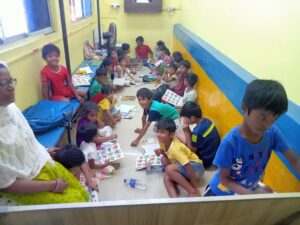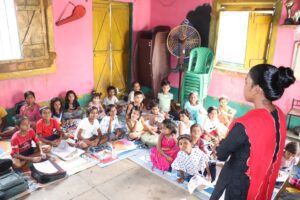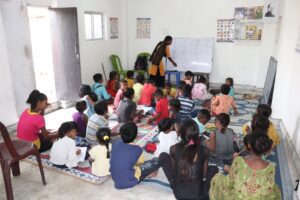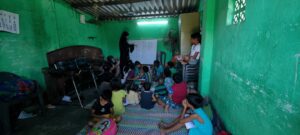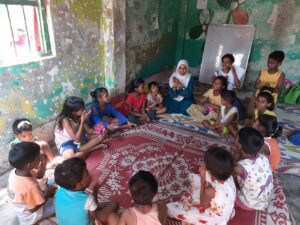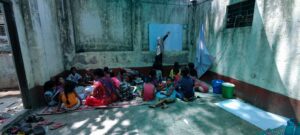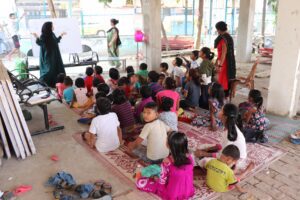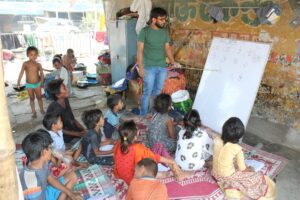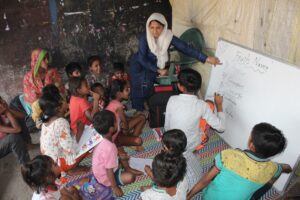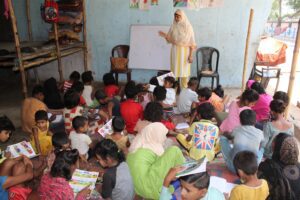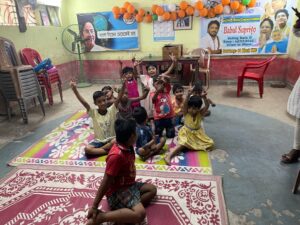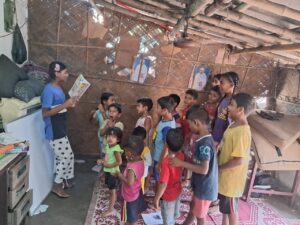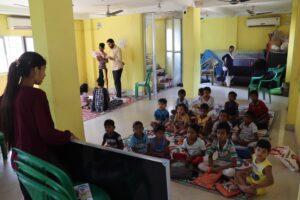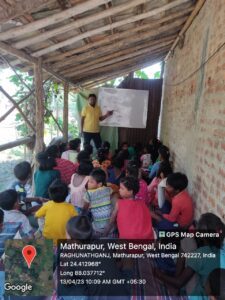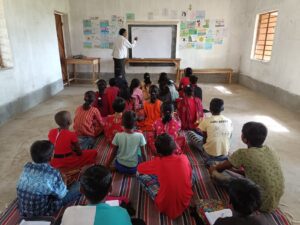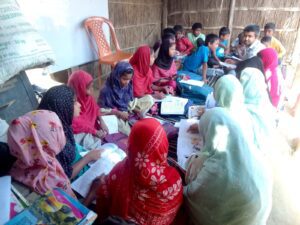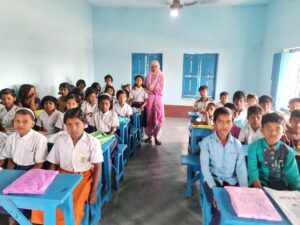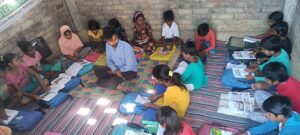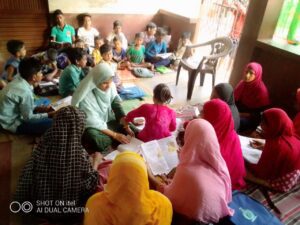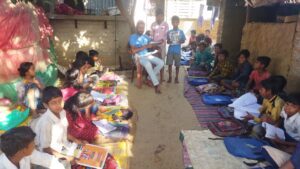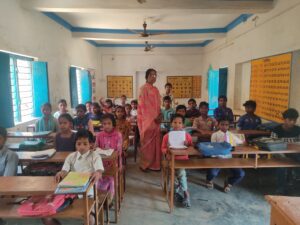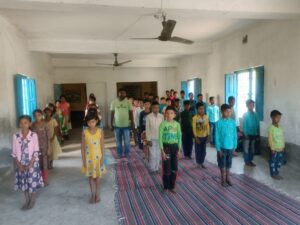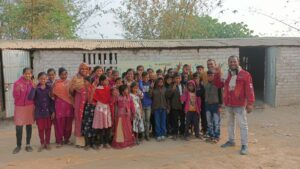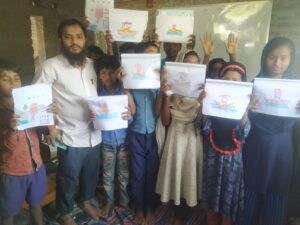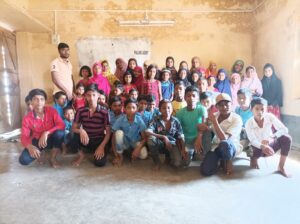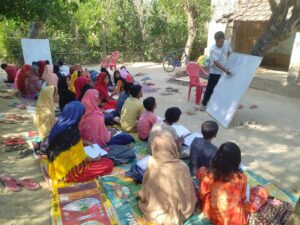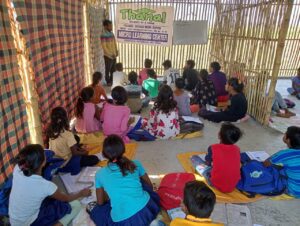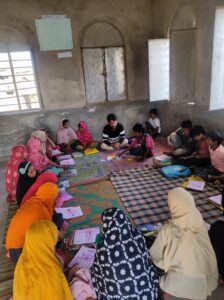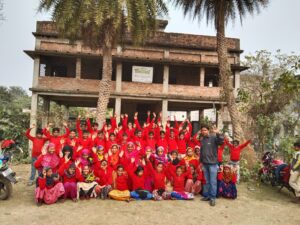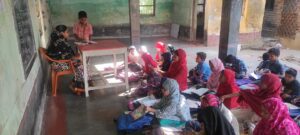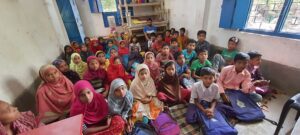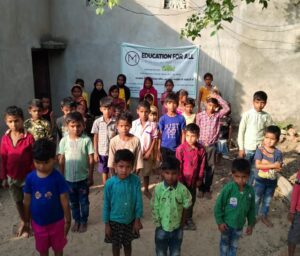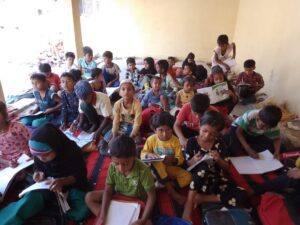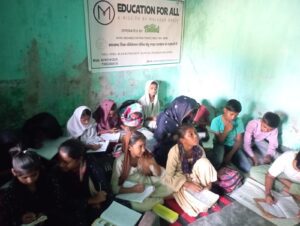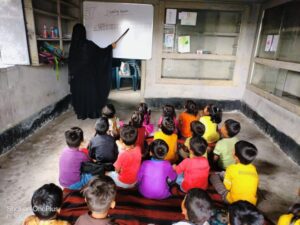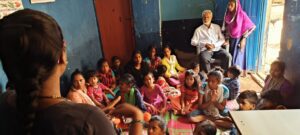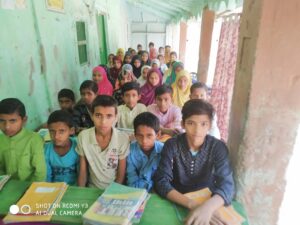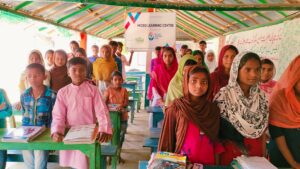
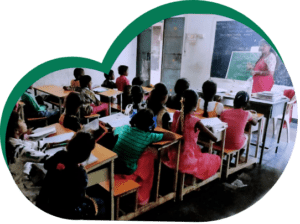
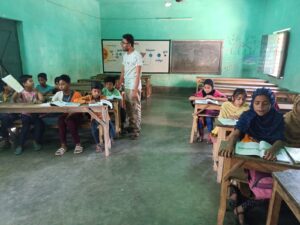
The Micro Learning Centres are community-rooted learning spaces created to support children who have fallen out of the formal education system or who struggle to stay engaged in regular schooling. Built on a flexible one-year bridge curriculum, the program creates an enabling environment where children who are dropouts, irregular attendees, or slow learners can rebuild their academic foundation, strengthen life skills, and regain the confidence needed to re-enter mainstream education. The centres function as neighbourhood learning hubs offering foundational literacy and numeracy, life skills, basic digital exposure, and awareness on hygiene, nutrition, and health—ensuring that learning is both meaningful and relevant to the daily realities of marginalized children.
The programme exists because large pockets of India—both rural and urban—continue to face chronic educational exclusion. Field assessments across Delhi, Bihar, Jharkhand, Karnataka, and other states revealed that many children either never enrolled in school or discontinued due to poverty, migration, poor school quality, caregiving responsibilities, or the need to work. The COVID-19 pandemic deepened these gaps through learning loss, displacement, and nutritional insecurity. For communities that face hunger, unstable livelihood, and low literacy levels, a rigid schooling system alone cannot address the barriers children face. The MLC model responds to this gap with a localized, nurturing, and adaptable approach that blends education with nutrition, health linkages, and community involvement—addressing both academic needs and the social determinants affecting learning.
The programme works with children from street-dwelling families, migrant communities, socio-economically disadvantaged households, and those living in rural poverty belts and urban slums. Parents, community volunteers, ASHA/health workers, government schoolteachers, local leaders, and partner institutions act as key stakeholders supporting enrolment, mainstreaming, and access to entitlements.
The initiative began taking shape in 2021 following extensive field interactions in Delhi, where volunteers first observed widespread dropout patterns. It formally evolved into a structured education component under the Integrated Project for Rehabilitation of the Homeless (IPRH), with progressive expansion across multiple states. Each academic cycle runs as a yearly entry-and-exit programme, ensuring that children complete the bridge course and transition back to school in the following academic year.
MLCs operate across underserved locations in several Indian states, with a strong presence in rural belts, urban slum clusters, and migrant settlements where access to education and services is limited.
The centres follow a child-centred, activity-based, and flexible methodology that integrates academics with nutrition, hygiene practices, health screening, parental engagement, and entitlement linkage. The programme aligns strongly with SDG 1, 2, 3, 4 and 10 by addressing poverty, hunger, health, education, and inequality.
Stakeholders can support the programme by volunteering, partnering for resources or training, funding centre operations or meals, participating in community mobilisation, or assisting with school admissions and follow-ups—strengthening the collective effort to create a pathway from vulnerability to opportunity for every child.
Dashboard: https://analytics.zoho.in/open-view/271101000007391081/4839a095c501c4ce9bd38844e301f6c6